Muslim Matrimony Biodata Format: Free Downloadable Template
Free Muslim matrimony biodata format with an editable DOCX and PDF generator. Honest structure families actually read, then create a verified Barkat profile.
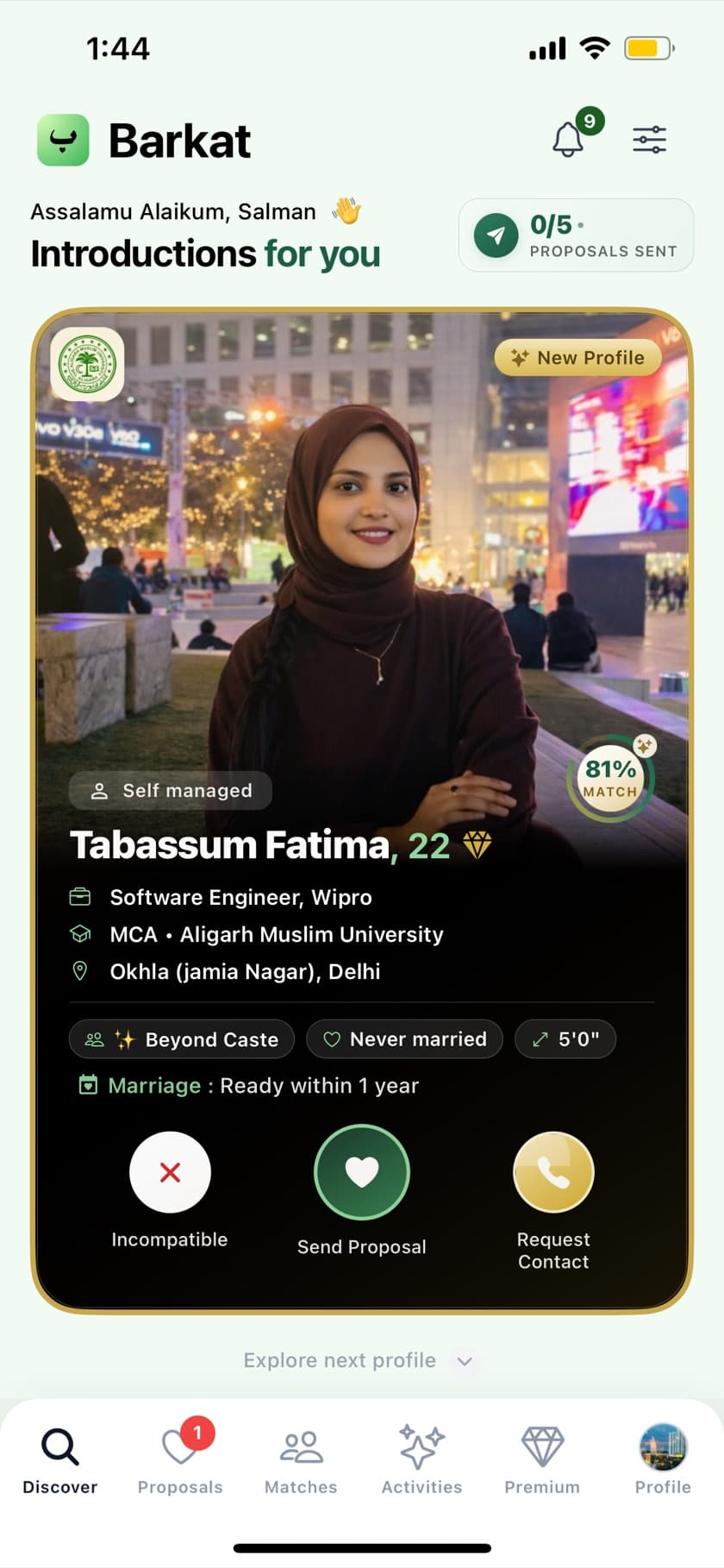
A Muslim matrimony biodata format is still how most Indian families introduce a son or daughter for nikah. Relatives forward a PDF. Parents print a page. A wali wants something they can read in two minutes. If your format is messy, exaggerated, or missing education, the rishta stalls before anyone speaks.
This page gives you a free downloadable template—editable DOCX and PDF—plus the rules that keep a biodata honest. After you generate the file, you can turn the same information into a manually verified Barkat profile so you are not stuck in WhatsApp chains.
What a Muslim biodata must include
Keep the document to one or two pages. Families scan; they do not read essays.
- Identity: full name, age, city, height if you are comfortable sharing it.
- Education and institution: degree, university, year. This is the line educated households look at first.
- Profession: role and industry, not a salary theatre performance.
- Family: a short, respectful paragraph—parents, siblings, values.
- Deen: salah, hijab or beard practice, madhab if it matters in your community. Do not perform piety you do not live.
- Looking for: nikah timeline, city or relocation, non-negotiables.
- Next step: wali contact, or “contact via Barkat.”
Marital status should be clear. Barkat itself lists first-time nikah profiles only, so if you are building a Barkat profile, do not use this template to advertise a second marriage on the app.
For a longer writing workshop, see how to write a Muslim biodata for marriage.
Sample lines that read well
Education: “B.Tech, Jamia Millia Islamia, 2019. Working as a product engineer in Bangalore.”
About: “I am looking for nikah, not chatting. I pray, I work, and I want a household where deen and a career can both survive the week.”
Looking for: “Someone serious about marriage within a year, comfortable involving parents early, open to living in Hyderabad or the Gulf.”
Avoid insults dressed as filters (“no drama,” “no timepass”). State what you want instead.
Photo etiquette
If you attach a photo to the PDF, use a recent, modest, well-lit picture. Many sisters prefer no public photo; say so on the biodata and share privately through family. On Barkat, photo visibility stays under your control until you choose to share.
After you download: why Barkat
A DOCX is useful for uncles. It does not verify anyone. Barkat reviews every profile before it goes live, checks government ID and education documents where submitted, and lets parents participate without a public grid. Create the same biodata in the app, filter by alma mater, and send a proposal instead of forwarding files to twenty groups.
FAQ
What is the best Muslim matrimony biodata format?
A one-to-two-page document with identity, education, profession, family, deen, and what you are looking for—honest, scannable, and with a clear next step for the wali.
Can I download a free Muslim biodata template?
Yes. Use the generator on this page for an editable DOCX or a PDF. Nothing is uploaded to Barkat’s servers.
Should I still make a Barkat profile?
Yes, if you want verified graduate matches. A PDF cannot search AMU or Jamia alumni, hide photos, or involve a guardian inside a product built for nikah.